Introduction
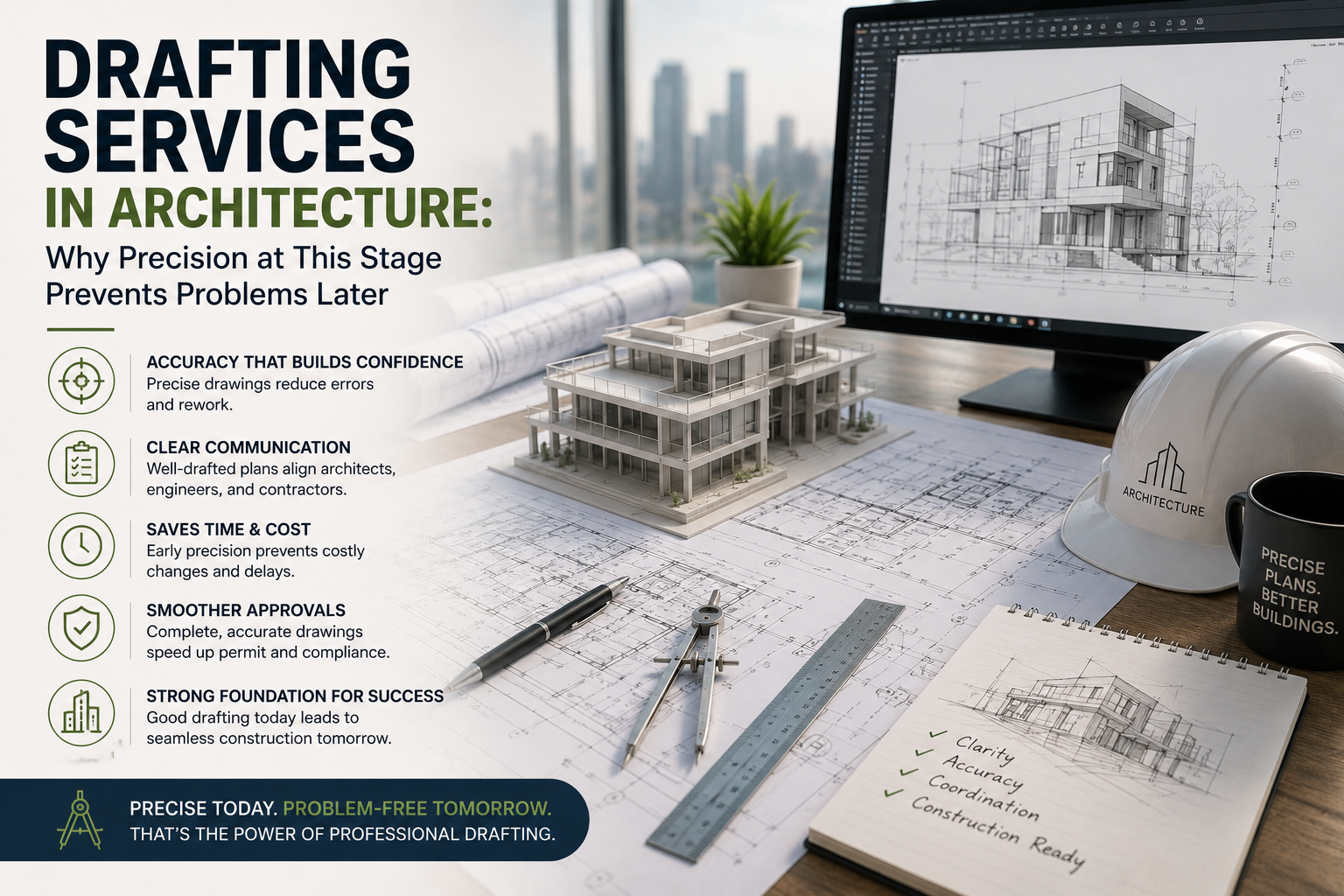
Architectural design is often judged by what people can see: the layout, materials, elevations, finishes, and overall visual concept. But behind every successful project is a less visible stage that determines whether those ideas can actually be built properly. Accurate architectural drawings translate design intent into information that contractors, engineers, suppliers, and site teams can understand. Working with the best drafting services can reduce confusion, improve coordination, and help prevent problems before construction begins.
Drafting Turns Design Ideas Into Buildable Information
Construction teams require a lot more detail than a concept sketch can provide in terms of communicating an idea. They require dimensions, levels, wall positions, openings, material specifications, ceiling information, sections, details and co-ordination points. These elements are combined in architectural drafting to provide drawings that can be used to direct execution.
When information is not provided or is not apparent, those on site may have to draw conclusions. This can result in incorrect dimensions, misplaced openings, incorrect alignment or rework. The ideal draft minimizes uncertainty at the outset of work.
Small Drawing Errors Can Become Expensive Site Problems
A mistake that looks minor on a drawing can become much more serious during construction. A wall dimension that is slightly incorrect may affect built-in furniture. A door opening placed in the wrong position may interfere with circulation. An inaccurate ceiling level can create conflicts with lighting, ducts, or services.
This is exactly why does precision in architectural drafting prevent costly construction errors: drawings act as instructions for the people building the project. If those instructions are incomplete or inaccurate, errors can quickly move from paper to the physical site.
Choosing the best drafting services helps reduce these risks by ensuring that information is carefully reviewed, coordinated, and clearly presented.
Coordination Is Just as Important as Accuracy
Architectural drawings are not standalone. They must collaborate on structural drawings, mechanical systems, electrical plans, plumbing, fire/ life safety, joinery, lighting and other specialty data. A beam can be a constraint for a ceiling design. A service shaft can impact the design of a space. Lighting positions can have to sync up with air-conditioning diffusers and ceiling details. Correspondence is one of the most vital aspects of the task of locating and fixing these relationships. If the various disciplines are well co-ordinated, then site teams know how the project should be knitted together. This minimises the conflicts and will avoid making changes at the last minute during construction.
Detailed Drawings Improve Communication
There are numerous people working on construction projects, each having their own role to play. While designers or architects may have an overall idea of the design, it is contractors and subcontractors who have to have the details in order to carry it out properly. Detailed drawings establish a common point of reference.
Drawing dimensions, sections, elevations, annotations and construction details minimize conflicts between various work crews. That is one of the biggest benefits of working with the best drafting services. Good drafting is not simply about making drawings look neat. It is about making technical information easy to understand and practical to use.
Precision Also Protects Design Quality
Poor drafting does not only create technical problems. It can also weaken the final design. Misaligned finishes, incorrect joinery dimensions, awkward junctions, inconsistent levels, and badly coordinated details can make a carefully designed space feel unfinished. Precise drawings protect the original design intent by showing exactly how important elements should be constructed. At RBS Studio, architectural design is approached with attention to planning, detailing, coordination, and practical execution. The aim is not only to create visually strong concepts but also to develop clear information that supports the project through construction.
For clients planning residential, commercial, hospitality, or interior projects, investing in accurate drafting can save time, reduce uncertainty, and help achieve a better finished result.
Explore RBS Studio’s architecture and design expertise at https://rbsstudio.com/.