Introduction
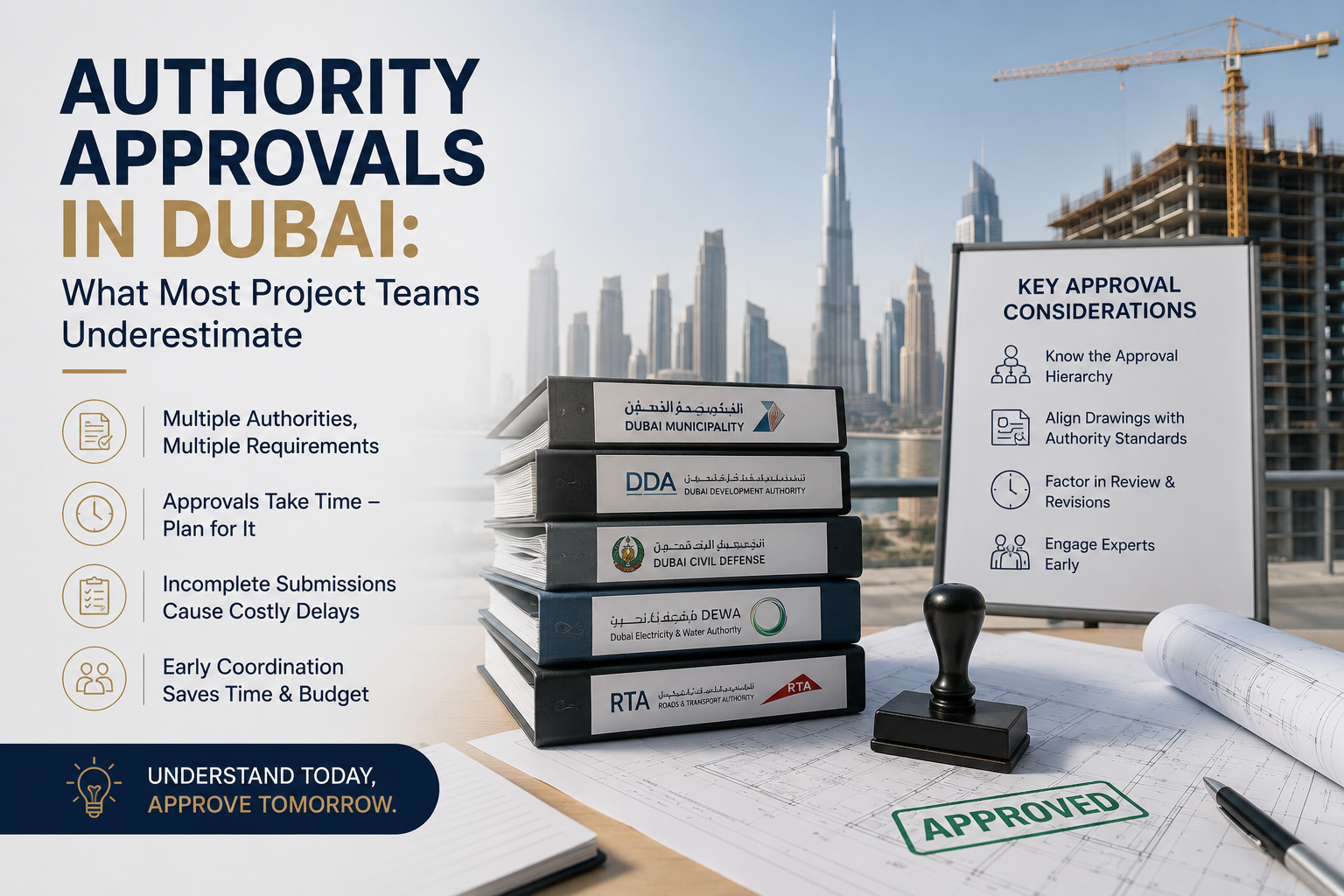
In Dubai, a well-designed project still cannot move forward smoothly without the right approvals. Architectural concepts, structural drawings, MEP coordination, and fit-out plans may all be ready, but if the approval process is not handled properly, progress can slow down quickly. This is where many project teams underestimate the amount of planning involved.
An experienced authority approvals service can help organise submissions, coordinate documentation, respond to comments, and keep the approval process aligned with the wider project programme. It is not simply an administrative task. It is part of project delivery.
Approvals Need to Be Considered Early
One of the most common mistakes is treating approvals as something that happens after the design is complete. In reality, authority requirements should be considered much earlier.
Design decisions related to access, fire safety, parking, circulation, services, structural systems, building use, and other technical elements can affect whether a submission progresses smoothly. If these requirements are ignored during design development, major revisions may be needed later.
For teams asking what authority approval stages are involved in Dubai construction projects, the exact process depends on the project type, location, development authority, scope of work, and building category. In most cases, approvals may involve design reviews, technical submissions, NOCs, revisions, inspections, and final clearances at different stages of the project. Understanding these requirements from the beginning can save considerable time.
Small Documentation Issues Can Cause Big Delays
Approval delays are not always caused by major design problems.
Sometimes the issue is a missing document, inconsistent drawing information, incorrect submission format, outdated project data, or a mismatch between architectural and engineering packages. These may sound like minor matters, but they can interrupt the entire submission cycle.
A professional authority approvals service helps reduce this risk by checking that documents are coordinated and complete before they are submitted. It also creates a clearer process for tracking comments, revisions, and resubmissions. This becomes especially important when several consultants are involved.
Coordination Between Disciplines Matters
The construction, structure, MEP, fire and life safety, and specialist systems can not be dealt with independently without coordination.
Such changes in service routes could affect ceiling layouts, for instance. Architectural planning may change due to structural changes. Access may impact entrances or circulation. Approval submissions are more consistent and less prone to conflict by reducing the likelihood of multiple information submissions to a reviewing authority through good coordination. That’s why it’s important to get approvals in at the design phase and not at the tail end of the project.
Approval Delays Affect More Than the Schedule
When an approval is delayed, the impact often spreads beyond a single milestone.
Procurement may be postponed. Contractors may be unable to begin specific works. Materials may remain on hold. Site teams may have to wait for confirmed drawings before proceeding. These delays can create cost pressure as well. Using an authority approvals service can help project teams maintain better visibility over submission status, outstanding comments, and required actions. While no approval process can be made completely predictable, good preparation reduces avoidable delays.
Experience Makes the Process More Manageable
Successful authority coordination requires more than filling out forms. It requires careful documentation, communication between consultants, understanding project dependencies, and ensuring that revisions are properly reflected across the design package.
RBS Studio approaches architecture and design with a strong emphasis on technical coordination, detailing, functionality, and practical project delivery. For projects in Dubai, this means considering approval requirements alongside design development so that creative ideas can move toward execution with fewer unnecessary obstacles.
For developers, businesses, and property owners, the approval stage should never be treated as an afterthought. It is one of the processes that can determine how smoothly a project moves from design to construction.
Explore RBS Studio’s architecture and design expertise at https://rbsstudio.com/.